Keyword research should be the first step in content creation, and the basis for any online marketing campaign. When it comes to writing content for your website, blog or social media posts, you can’t skip this important step.
What Is Keyword Research?
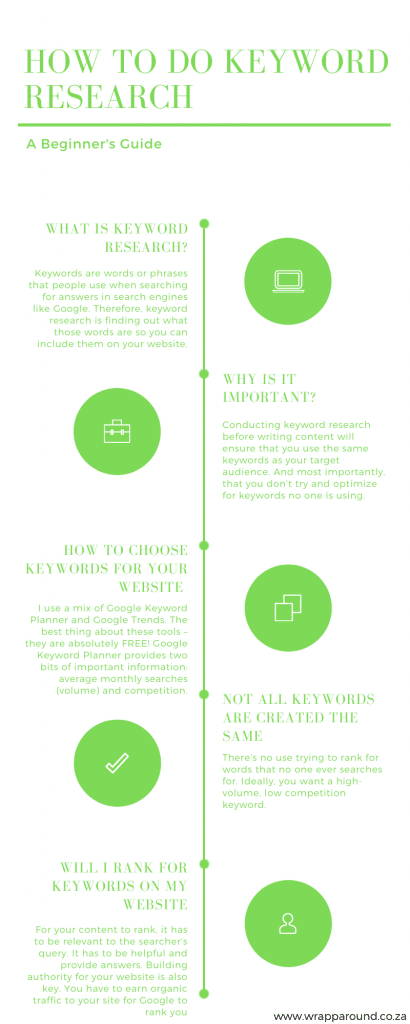
Keywords are words or phrases that people use when searching for answers in search engines like Google. Therefore, keyword research is finding out what those words are so you can include them on your website. This research will give you insight into what your audience is thinking, how they speak, and how they search.
Why Is It Important?
Let’s imagine you own a sushi restaurant, and have decided to create a website. As a sushi chef you are proud of your skill, and are referring to yourself as a ‘guru of eastern cuisine’. This is a catchy and unique phrase that most people will remember. But, how many people actually use that phrase when searching for a sushi restaurant?
Conducting keyword research before writing content will ensure that you use the same keywords as your target audience. And most importantly, that you don’t try and optimize for keywords no one is using.
How To Research Keywords For Your SEO Strategy
Research isn’t sexy, glamorous or fun. What it is though, is essential. And when done consistently, it can reap a lot of benefits.
As important as this step is, a lot of us skip it because we get bogged down and frustrated by the process. There’s so much information that we often don’t have a system in place on how to do it efficiently.
In the next few sections, I’ll share tips and strategies that we use to make this process easier and less frustrating.
Keyword Discovery
So, what terms are people searching for?
You most likely have a generic way of describing what you do. These are called seed words, and can be very broad. For example, photographer, wedding, events, etc.
If, however, you’re stuck and don’t know where to start, the best way to find suitable keywords is to channel you inner James Bond and spy on the competition. Find out what keywords your competitors are using and add them to your list. And here’s how you do it.
Keyword Discovery Tools
There a lot of keyword discovery tools out there and you might get analysis-paralysis while deciding which ones to use. As you become more comfortable with the process you will create your own system. But for now, let me share my favourite methodology.
I use a mix of Google Keyword Planner and Google Trends. The best thing about these tools – they are absolutely FREE!
Google Keyword Planner

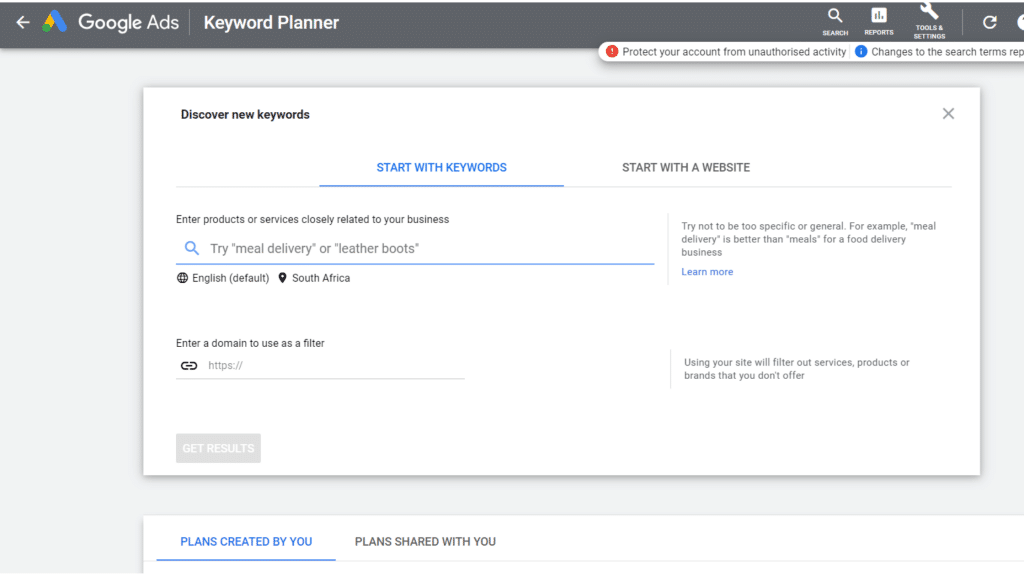
For Google Keyword Planner, you will need to create a Google Adwords account (if you don’t already have one). In the Keyword Planner page, you have two options: discover new keywords (if you have a list of already) and a website search (enter your competitor’s URL to discover their keywords).
Make A List Of Relevant Keywords
When you start with ‘sushi restaurant near me’, you will also get a list of similar keywords people are searching for. Make a list of all these terms and keep them close. We are going to add on to that list before we decide on what to keep and what to discard.

Some keywords that your competitors use might not be relevant to you. Make a list of the relevant keywords that you not only want to use for your website, but ones that you might include in blogs and social media posts.
By now, your list should be coming along nicely.
Google Autosuggest

I use this trick for writing my blog posts (like this one). I enter part of the keyword phrase I want to use and see what else people are searching for in relation to that topic. As you can see, Google is giving me a few suggestion that I might use in my post.
After clicking for the term I’m searching for, the search engine results page (SERP) normally has a combination of 10 blue links and paid searches (adverts) at the top and bottom of the page. At this stage, what I’m looking for is the ‘People Also Ask’ section.

This section contains a fountain of information as it provides insight into what searchers also want to know about the topic I’m writing about.

I then scroll to the bottom of the page for more suggestions.
If you’re not feeling like your list is getting out of hand, then you’re doing something wrong!
How To Choose Keywords For Your Website
Use Google Trends
This great tool reveals the trend history and projections of keywords you have on your list. You can see which terms are popular now, and which terms are trending upwards and might be worth investing in.
So if a phrase you’re keen on is popular now but trending downwards, ask yourself if it’s worth the investment.
Not All Keywords Are Created The Same
Google Keyword Planner provides two bits of important information: average monthly searches (volume) and competition.
Volume
There’s no use trying to rank for words that no one ever searches for. You can rank high for ‘guru of eastern cuisine’, but if the search volume is non-existent, no one is going to discover your website.
Competition
Google Adwords displays bid competition for keywords, which is the competition for paid advertising (not organic searches). Even though you can’t see results for organic traffic, the logic is no one is going to bid for a word that people are not searching for.
Ideally, you want a high-volume, low competition keyword.
Another trick I use to rank keywords is to look at the actual amount bid for a particular keyword. The downside of Keyword Planner is that is provides average monthly searches (100 – 1k) instead of an actual number like 400. So when you have two phrases within the same range, it might be difficult to prioritize.
Getting back to my sushi restaurant example, let’s take two phrases in the same range: ‘japanese restaurant near me‘ and ‘best sushi near me‘ have the same average monthly searches and competition. So how do you choose (if you had to choose)?
Look at the last two columns in the image above: ‘low range’ and ‘high range’. The amount bid for these two phrases is not the same. ‘Best sushi near me’ is more expensive. I use this as a guide when I have to choose between two keywords.
Short-tail vs Long-tail Keywords
Short-tail keywords are search phrases with one or two words. They are less specific and broad in nature. For example, ‘sushi’. It’s not clear if a person is looking for a restaurant, a recipe or sushi rice. These terms typically have a high search volume.
Long-tail keywords, on the other hand, are more specific in nature. For example, ‘sushi restaurant near me with outdoor seating‘. This searcher knows exactly what they want and is more likely to convert better than a searcher looking for just ‘sushi’.
Will I Rank For Keywords On My Website
SEO is a multi-faceted discipline and a long-term investment. Perfecting one aspect, while neglecting others, will not get you at the top of the rankings.
Google also considers the following two aspects (among others):
Relevance
For your content to rank, it has to be relevant to the searcher’s query. It has to be helpful and provide answers.
So writing thin content that provides no value to searchers will not do you any favours. Which is why keyword research is vital.
Authority
Building authority for your website is also key. You have to earn organic traffic to your site for Google to rank you. And your visitors should actually spend time on your site (reading articles, watching videos, etc).
Which leads me to another tip. While doing competitor research, check out the pages that are ranking high for your target keywords. If the first SERP is full of sites like Wikipedia, CNN, etc, then chances are you won’t be able to kick them out of the first page. These sites have built authority over the years and have millions of visitors a month.
But, if the top positions are taken by your competitors, then you can work hard to kick them out of first position.
In conclusion…
Long story short, keyword research helps you get ranked by Google, thus making you exist online. It’s tempting to skip a step and hope for the best. But if you didn’t take short cuts in product development, why are you willing to do so here?
Please let us know what you’re struggling with while conduction your research. Better yet, let us know if you have a trick up your sleeve that we haven’t discovered yet.
Please feel free to share this post!