
Quick Summary
- A buyer persona is a fictional representation of your real customer.
- For marketing and sales, it allows you to personalize your message.
- Don’t delay starting because you want to create the ‘perfect’ persona. You can make improvements as you go along.
- There is no one-fits-all model on the number of personas you can have.
- Download our free template to get you started.
Digital marketing (also known as online marketing or internet marketing) is the process of marketing and promoting your product or service online. With millions of people online every day, it is important to understand who your target market is.
In our last blog we mentioned eight ways to improve your digital marketing strategy.

- Buyer persona – your audience
- Digital sharecropping. Running all your marketing efforts on social media and neglecting your won website
- Search engine optimization
- Writing attention grabbing headlines to entice your audience to read
- Adding a call to action to all your posts
- Using e-mail marketing to convert your audience
- Quality over quantity
- How to promote your content
In this post we take a deep dive of the first element, your buyer persona. Everything you do begins and ends with your client. So let’s dive in!
What is a buyer persona?
A buyer persona is a fictional representation of your ideal customer based on market research, interviews with existing customers and employees. This information should include demographics, behaviour and buying patterns, goals and challenges, pain points, etc. The more detailed the better.
Why is it important?
As a company grows, it’s easier to lose the big picture of who the client is. Creating a buyer persona keeps the whole company on the same page, like a compass that determines the direction of your journey. For marketing and sales, it allows you to personalize your message to your customers. It makes content creation, product development and your sales pitch much easier. Your business will understand and empathize with your customers so they can do a better job of servicing them.
How annoying is it to be constantly bombarded with emails on a topic you have absolutely no interest in? That’s what happens when a business does not do its homework and assumes that all customers are the same. When done properly, you will be able to segment the audience in your database and tailor-make your campaigns accordingly.
Let’s say you produce multiple products with different target markets. For example, feminine hygiene products and shaving cream. When you send out monthly newsletters to your database, you can segment your list by gender to make sure that you’re selling the right product to the right audience.
How Many Buyer Personas Should I Have?
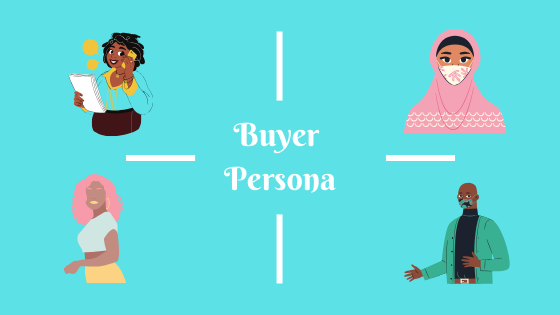
It depends! There is no one-fits-all model that applies here. Some businesses have 20, while at Wrapp Around we only have two.
Start with one or two personas. This will keep you focused on the primary sales strategy. Once comfortable, you can move on to the next one if necessary. When you talk to your customers and continuously do surveys, you will be able to see when a new persona emerges.
Tip! Don’t delay to have the perfect persona. Start now and let your personas grow organically. Just remember that you need to revisit the process often, at least once a year.
How To Create A Buyer Persona
Now that you know that having a buyer persona is important for your business you want to know… how do I create one? Always start with what you have. Look through your existing client database and have conversations with client-facing employees. Talk to happy and unhappy customers, those who bought from you and those who bought from your competition.
Social media is a great place to start. Platforms like LinkedIn and Twitter have made it easy to conduct surveys. Use incentives to entice people to participate. Try and interview as many people as possible to get a better understanding of your customer.
Sample Persona Information
- Personal information – name, age, social networks, education background, marital status.
- Career information – income bracket, job title, industry, highest qualification, company size, job responsibilities.
- Goals and challenges – biggest challenges, definition of success, growth opportunities.
- Pain points – frustrations, stress points, bad experiences.
- Preferences – publications, blogs, social networks, hobbies, communication, vendors, shopping
Negative Personas
A buyer persona is your ideal client you want to target. A negative persona is one you don’t want as a client.
Why is it important to know this? For example, you can exclude a certain income bracket if you sell a premium product. Or, as a butcher, you can exclude vegan restaurants on your pamphlet distribution route. Creating a negative persona will also help to keep you on track.
It’s A Wrapp!
Don’t get bogged down by unnecessary details. As a B2B, your focus could be less on the gender of your customer than a B2C. Always make improvements to your ideal customer, so revisit and revise at least once a year.
You’re now ready to start creating your buyer persona. Download our template here to get you started. Leave a comment for us below to let us know how you’re doing.
Click here to join our mailing list.
Don’t forget to share this post!
